In today’s world where smartphones and social media are widespread, even though we are connected online with friends and acquaintances, hasn’t the time we actually meet in person and talk been decreasing? A major reason is that tasks can be completed via the internet, making it possible to live without going out of one’s way to communicate face-to-face. In recent years, the COVID-19 pandemic has further normalized remote work and online classes, and opportunities to meet people directly have decreased even more.
Reflecting these changes, the amount of time people spend interacting face-to-face each day has dropped significantly. According to the Ministry of Internal Affairs and Communications’ “Survey on Time Use and Leisure Activities,” the average daily time spent on “socializing/associations” was 29 minutes in 1991, but shortened to 17 minutes in 2016. This means that in those 25 years, time spent on face-to-face communication decreased by more than 40%. The graph below shows the trend in face-to-face interaction time from 1991 to 2016.

Especially since the 2000s, the ability to exchange messages anytime via mobile phones and smartphones, and to stay constantly connected through social media, has come with a trade-off: fewer opportunities to meet and talk directly. As telework became established after the pandemic, even the chance to “see someone every day at the workplace or at school” decreased, and people refrained from social drinking gatherings and going out on weekends—pushing human interaction even further toward online channels. As a result, days in which “the day ends without meeting anyone” are becoming less and less unusual.
As time spent meeting people directly decreases, it appears that the number of people who “feel lonely” is increasing. In fact, in a nationwide government survey, about 40% of respondents answered that they feel loneliness in some form. This tendency is particularly pronounced among younger people in their 20s and 30s, with a higher proportion than other age groups saying they “often feel lonely” or “always feel lonely.” The reality is that the more “digitally native” the generation, the more ironically they may be prone to loneliness.
The situation is similar when looking at the Tokyo metropolitan area. In a survey of men and women in their 20s and 30s living alone in Tokyo and its surrounding areas, 43.9% said, “I sometimes feel loneliness or isolation in my current life living alone.” This means that nearly half of young people feel loneliness in everyday life. Behind this lies the small number of opportunities to meet others during private time. According to the same survey, among those who said they feel lonely, 45.1% reported that the frequency of face-to-face interaction in their private lives outside of work is “less than once a week.”

In this way, the data suggests that an extremely low frequency of meeting people is directly connected to feelings of loneliness. In fact, the Cabinet Office’s analysis has also shown a tendency that “the more frequently people interact with friends, the higher their subjective life satisfaction.” For example, it has been reported that people who meet friends “3–4 times per week” score more than 2 points higher in life satisfaction than those who have “no such person at all.” Conversely, if a situation of not meeting anyone continues, it is more likely to negatively affect a sense of fulfillment in life and mental health.
Young people who feel lonely try various ways to cope in order to fill that emptiness—watching movies and dramas on video streaming services, immersing themselves in hobbies, scrolling through social media, and so on. However, most feel that such “compensatory behaviors do not fundamentally solve the problem”. In the earlier survey of the Tokyo metropolitan area, more than 85% answered that “even if I distract myself, it does not lead to a fundamental resolution of loneliness,” and more than 65% said that “deep down, I want to increase interaction with people.” In the end, longing for people cannot be fully filled by digital entertainment, and it can be said that many young people’s true feelings are: “I want to meet someone and talk face-to-face,” and “I want connection.”

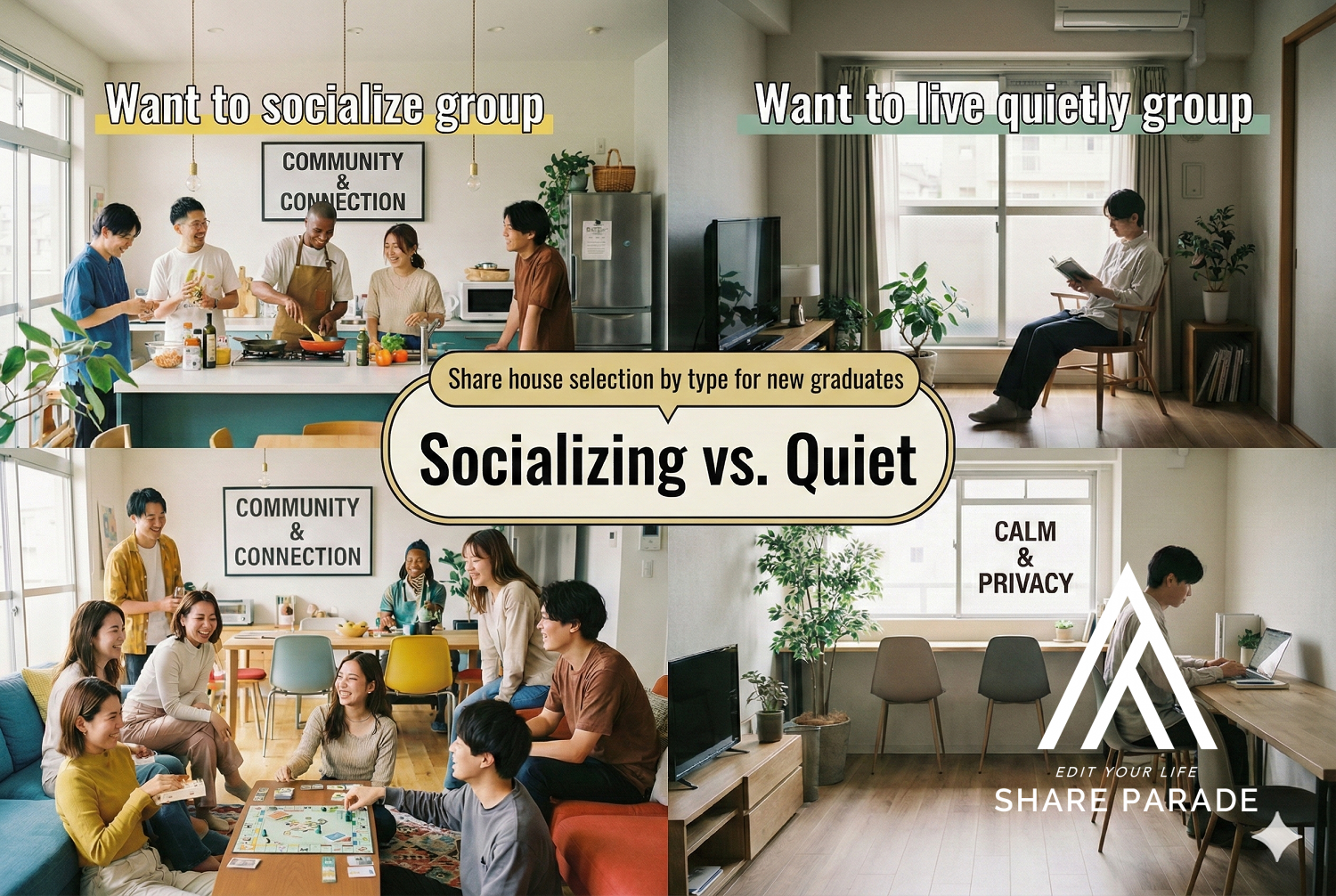
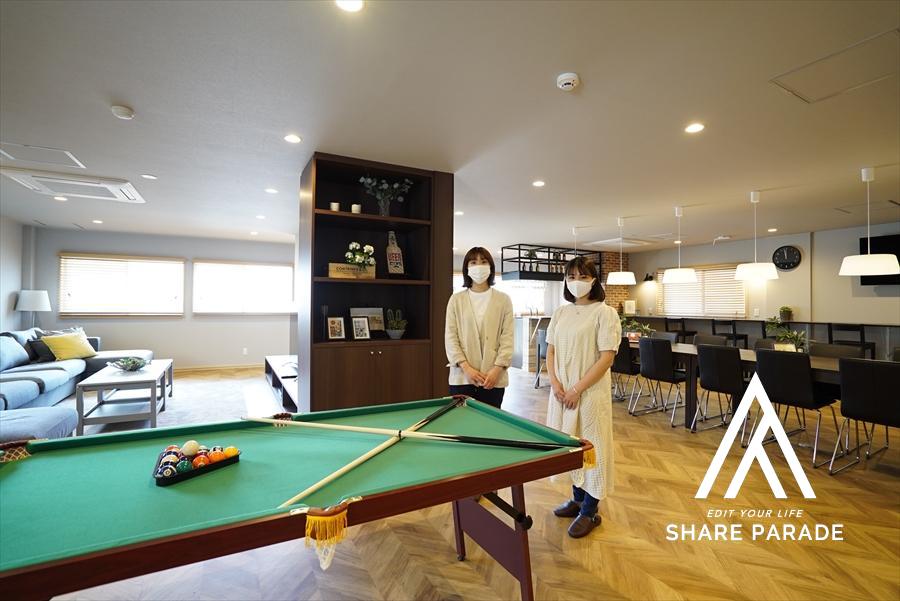
What is attracting attention, therefore, are ways of living with multiple people, such as share houses and co-living. A share house is a style of residence in which a single home has individual private rooms and shared spaces such as a kitchen and living room, and strangers live together. It is said to be not “just a place to save on rent,” but “a place that eliminates loneliness, and provides a sense of security and exciting encounters.” By literally sharing daily life, everyday touchpoints and mutual support emerge—things that cannot be obtained when living alone.
Co-living is a new format in which the share-house concept adds the function of “sharing a working space (a workplace).” It is a shared-living space that integrates home and workplace, matching the needs of modern society where remote work is widespread. Beyond simply living together, residents work on jobs and projects together, and workshops and events are held regularly—making deeper community-building a key feature. Since COVID, when relationships with others tend to become distant, co-living—where you can “live and work with peers who share the same sense of purpose”—has been drawing attention, and facilities have begun increasing in Japan as well, especially among young freelancers and remote workers.
Above all, living in a share house or co-living environment offers the “reassurance of always sensing someone nearby.” Even if you come home late at night, you may not be alone in a dark room—there may be a housemate who says “Welcome back.” If you suddenly become ill, having someone around could mean being noticed and receiving help. Such small, everyday exchanges and mutual support bring a sense of emotional stability that cannot be obtained when living alone. In fact, it has been pointed out that “the greatest benefit of a share house is the presence and connection of people, contributing greatly to emotional stability beyond financial benefits.”
In communal living, conversations naturally arise in shared spaces such as the living room and kitchen. A simple “Good morning” in the morning, or a bit of chatting in the living room after work, can become daily emotional support. Indeed, there are voices saying that “an environment where you can always talk to someone without feeling the loneliness of living alone can also become emotional support,” and in share houses, residents may casually consult each other about small worries, or enjoy cooking together and watching movies on weekends—tending to enrich private time as well. When the warmth of spending time with others is part of everyday life, loneliness eases and you may feel more positive.
Furthermore, the community that forms from living under the same roof offers a kind of reassurance that goes beyond ordinary friendships. It is also appealing to share hobbies and information with housemates and to ask for work advice casually. Especially in co-living environments, motivated people with dreams and goals tend to gather, and an environment is created where they can stimulate and inspire each other while living and working together. One co-living facility introduction states that “by living and working in the same space, you receive positive influence and your own motivation increases.” This is the appeal of communal living: not only resolving loneliness, but also positively contributing to self-growth and careers.
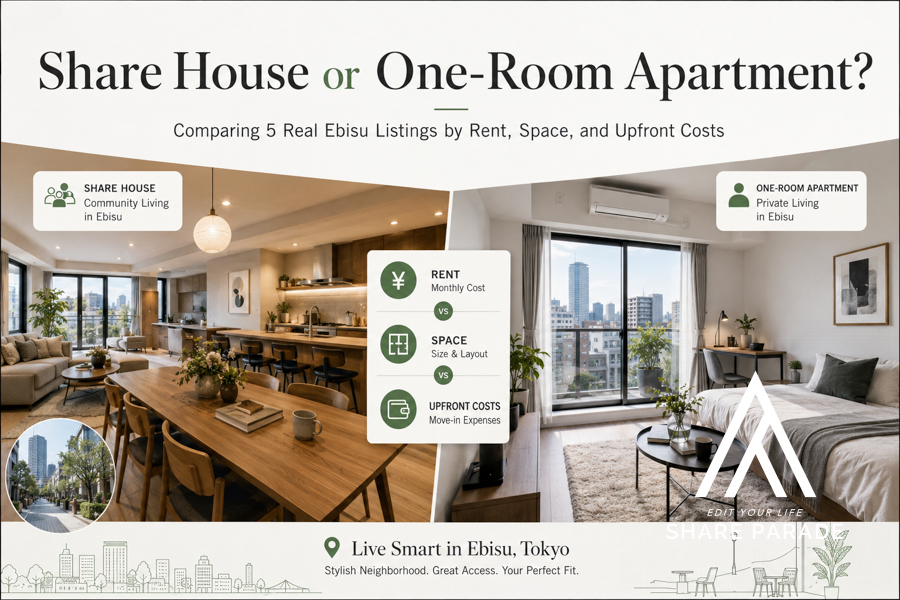
The reasons share houses and co-living are supported by young people in their 20s and 30s are not limited to reducing loneliness. **Financial benefits** are also a major attraction. Even in high-rent cities like Tokyo, sharing a private room and common areas can reduce rent and upfront costs. In fact, in a survey of office workers in their 20s living in share houses in Tokyo, the most commonly cited decisive factor for moving in was “financial benefits such as rent and initial costs.” What is interesting, however, is that “the appeal of meeting people and forming a community” also ranked near the top. Not only cost, but the ability to interact with others itself is becoming an important value for young people.
| Main Benefits of Share-House Living (From Survey Results) | Percentage |
|---|---|
| Reducing rent and initial costs | 34.9% |
| Meeting people and building a community | 31.6% |
| Good location | 25.0% |
| Work-related benefits through housemates | 25.0% |
The table above shows part of the results from the aforementioned survey of share-house residents in Tokyo, asking “What did you achieve by moving into a share house, or what did you feel were benefits?” Although financial benefits are the top item, more than 30% of people cite “meeting people and building a community” as a benefit they felt. Many people may only realize after living in a share house that daily interaction and connection can be a major positive factor for them.
Against this backdrop, share houses are becoming established as an attractive option for young people living in urban areas. There are also opinions that “as young people’s lifestyles and values diversify, share houses are gaining attention in urban areas as a new housing option.” More voices are emerging that evaluate share houses as places to create opportunities for self-fulfillment and networks that cannot be obtained when living alone.
That said, communal living also has disadvantages and challenges. Ensuring privacy, differences in daily rhythms, and compliance with rules are among the areas where the freedom of living alone may be restricted. In fact, in a survey asking share-house residents about disadvantages they feel, “concerns about privacy” was the most common response. Since you are living with others, it is not a completely free space only for yourself, and you need to keep that in mind. Even so, more than 70% answered that they are “at least somewhat satisfied with their current share-house life,” and 75% said they feel that “communal living has a positive impact on my self-fulfillment and career.” This suggests that many young people gain a sense of fulfillment and security that outweighs the inconveniences.
In today’s society, where time spent communicating face-to-face is decreasing and more young people feel lonely, shared-living residences such as share houses and co-living can become a strong solution. A life in which there is someone to exchange “Good morning” and “Welcome back” with each day can lighten the heart and bring a lively feeling—simply by existing. When you feel like you might be crushed by loneliness, the reassurance of having someone nearby who can be there for you is a value that cannot be replaced by anything else.
Urban areas have many single-person households—so much so that they are sometimes called a “solo society”—but that does not mean the desire for connection with others has disappeared. Rather, precisely because young people are accustomed to digital relationships, they may be experiencing a growing thirst for real bonds. In such a context, share houses and co-living are in the spotlight as new lifestyles that fill loneliness and improve quality of life. If you are struggling with everyday loneliness, why not take the bold step of considering the choice to “live with others”? There, surely, you will find smiles and encouragement that you cannot obtain on your own—and encounters with irreplaceable companions.

SHARE PARADE(シェアパレード) の運営責任者です。「EDIT YOUR LIFE ― 今の暮らしをちょっと変えてみる」を合言葉に、**コミュニティのある暮らし(Community Living)**を中心としたシェアハウスを紹介しています。2011年の立ち上げ以来、東京全域で800件以上を現地取材。私自身も一人暮らし/シェアハウス/ルームシェア/ソーシャルマンションを一通り経験しており、一次情報と体験の両方を基準にサイトを運営しています。「住む場所が変われば、ライフスタイルも変わる」。コミュニティがある暮らしの楽しさと安心を、もっと当たり前の選択肢に――それがSHARE PARADEの役割であり、私のミッションです。 I am the administrator of the website 'SHARE PARADE.' Under the motto “EDIT YOUR LIFE—make a small change to your everyday,” we feature share houses centered on community living. Since our launch in 2011, I have visited and reviewed more than 800 properties across Tokyo. I’ve personally experienced living alone, in share houses, in room shares, and in social apartments, and I run the site based on both first-hand information and lived experience. I believe that when your home changes, your lifestyle changes too. My mission—and SHARE PARADE’s role—is to make the joy and peace of mind of community living a more everyday choice.

![[10 Examples] Share House Trouble Cases and Prevention Tips to Know Before Moving In](https://sharepare.jp/upload_images/contents/202607/20260716_6a5861b26b7f20engi7.png "[10 Examples] Share House Trouble Cases and Prevention Tips to Know Before Moving In")