“Living in a share house looks fun, but I wonder if it really suits me…?” If you have ever felt that way, this article is for you.
It is true that some people are suited to share-house living and some are not. However, you can check in advance whether you are “the kind of person who is suited to a share house,” and depending on the way you choose a property and your mindset, you can also find a style of living that fits you.
In this article, we will thoroughly explain everything from the characteristics of people who are suited to share houses and a self-diagnostic checklist, to the types of people who are not suited and how to deal with that, and finally how to choose a share house that suits you. We have summarized it so that even beginners can read it easily, so if you are thinking “I wonder if I’m suited to this?” or “I feel anxious but I’m interested…”, please use this as a reference. By the time you finish reading, you should have a general picture of share-house life and feel, “I might actually be able to do this!”
Self-diagnosis checklist: First, check how well you fit share-house living

If you are interested in share houses but cannot take the first step, start by using this self-diagnosis checklist to see your own “degree of suitability for share-house living.”
Please count how many of the following items you can answer **“Yes”** to.
You like interacting with people
You enjoy meeting new people and chatting. You like spending time laughing together with someone.
You can respect other people’s values
Even when someone’s habits or opinions differ from your own, you can accept them with the attitude of “there are people like that too.” You believe that small misunderstandings can be resolved through discussion.
You are independent and cooperative
You can take care of yourself, and you have no resistance to sharing chores and house rules with everyone.
You do not worry about small things
A certain level of noise or minor inconveniences in daily life does not easily become a source of stress for you. You are flexible and can adapt to a new environment with ease.
You prioritize your household budget
You want to keep living costs such as rent and utility bills down. You feel it is attractive to be able to share a large living room and built-in furniture and appliances that you could not have in a solo apartment.
You want the reassurance of “someone being there”
You are happy when there is someone at home to say “welcome back” to you. Rather than feeling lonely being all by yourself at night, you feel reassured by the presence of others.
⇒ Diagnosis: The more items you checked, the more we can say that you are suited to living in a share house. For example, if at least half of them apply to you, your **“share-house suitability level is 60%,” and you are the type who wants to balance interaction and privacy. If 80% or more apply, your “suitability level is 90%,”** and you probably have the qualities to genuinely enjoy share-house life. Conversely, if you could hardly check any items, your suitability is 30% or less. You may be the type of person who values time alone and going at your own pace above all else. There is no need to force yourself into communal living, but if you have goals such as “I want to lower my rent” or “I want to have a little contact with people,” there are also ways to live comfortably through the methods described later. Next, let’s look at the specific characteristics of people who are suited to share houses.
This is just an aside, but all of the items applied to me. In reality, I think each of the above items carries a different weight depending on the person. Even for “liking to interact with people,” there is a difference between “I really like it!” and “If I had to say, I kind of like it.” In my case, although I say all of the items applied to me, I feel that many of them are more in the “if I had to say, I kind of like it” category. I think it is fine to judge that part loosely.
Characteristics of people who are suited to share houses

So, once again, what kind of people are suited to share houses? There is overlap with the checklist above, but here we will summarize the tendencies into five points.
People who are sociable and like talking and spending time with others
People who can enjoy chatting with someone in the shared living room or spending time eating together are suited to share houses. They are the type whose everyday life is enriched by interacting with others and who feel comfortable with exchanges like “I’m home” and “Welcome back.” They can naturally make friends and positively enjoy building new human relationships.
People who are easygoing, flexible, and do not worry about small things
In communal living, differences in upbringing can easily lead to mismatches in lifestyle habits and common sense. Even in such situations, people who do not get irritated at every little thing and can accept it with an attitude of “so there are ways of thinking like that too” adapt more easily. People who can understand and accept other people’s values are suited to share houses. Flexibility to enjoy changes such as slight rule modifications or changes in housemates is also important.
People who are independent and also highly cooperative
In a share house, the basic rule is that you take care of your own affairs (cleaning, laundry, cooking, etc.) yourself. People with the ability to live independently without relying too much on others are suited to this environment. On top of that, people who have the spirit of **“we’re in this together”** and can cooperatively follow house rules and share chores with other residents are ideal for communal living. For example, people who can participate in simple cleaning of shared spaces or taking out the trash on duty without feeling “I’m the only one losing out” are well suited.
People who can enjoy new environments and new values
Share houses are also suited to people who want to broaden their horizons by meeting others from a variety of backgrounds. Through cross-cultural exchange and conversations with people in different industries, they receive stimulation and can turn that into motivation to think, “I’ll try to challenge myself as well.” It is perfect for people who are not bound by fixed ideas and who have the desire to change themselves or jump into a new environment.
People who can positively feel the reassurance of “someone being there”
People who value the reassurance of having someone at home more than the loneliness of living alone are also suited to share houses. They are the type who feel “I’m relieved when I can hear someone else’s living sounds at night” or “I want someone nearby I can talk to when I feel down.” In share houses, there is often someone in the living room when you come home, so you can live while feeling the warmth of people. In other words, you could say that people who are a bit prone to loneliness may also be suited to communal living.
In summary, **people who are suited to share houses are those who can enjoy interacting with others while maintaining independence and cooperation, and who can live flexibly in a communal setting.** Such people can fully enjoy the merits of share-house life (cost reduction, new human relationships, etc.) and are likely to lead fulfilling everyday lives.
However, the above is only a generalization. There are people who, even if they are not very social, enjoy share-house life by making full use of facilities like a fitness room, and there are people who, because cleaning and such are handled automatically by the management (for example, when house cleaning is done by a contractor), can live at their own pace without having to cooperate that much with other residents. So even if you do not fit all of the above characteristics, there are share houses where you can live comfortably.
Characteristics of people who may not be suited to share houses
On the other hand, there are also tendencies such as “people like this may not be suited to share houses…” Here we will list some characteristics of people who tend to feel stressed in share houses. If many of these apply to you, you will need to pay particular attention to the kind of property you choose and the strategies you use, as described later.
People who want to prioritize privacy and time alone above all else
In a share house, all spaces other than your private room are basically always shared with someone. Because it is inevitably difficult to secure time and space where you can be completely alone without seeing anyone, people for whom time alone is more important than anything else may find it hard to relax. In addition, many properties have layouts where living sounds easily carry, and for people who want to live in a perfectly quiet environment, communal living can become a source of stress.
People who are sensitive to living sounds and noises
This is related to the above, but people who become nervous about even slight sounds should also be cautious. In a share house, you cannot completely avoid things like someone’s hair dryer, laughter, or the sound of people coming home late at night. Sounds that are nothing special to others can, when they accumulate, become a major source of stress for those sensitive to noise. People who are sensitive to noise will need to take measures such as choosing a property with good soundproofing.
People who are somewhat obsessive about cleanliness or overly meticulous
People who are extremely particular about cleanliness, such as those who are bothered just by water drops left in the sink of a shared kitchen, are likely to become exhausted in communal living. They tend to be dissatisfied with others’ cleaning frequency or how they tidy up, and their irritation may build up. If your ideals are too high—for example, “I want you to wipe things immediately after use” or “seasonings must be placed exactly like this”—you may feel stressed by other people’s more relaxed approach to housework. Conversely, people who are too loose (those who leave messes everywhere and cannot tidy up) also tend to create friction with those around them. Whether you are overly meticulous or too careless, mutual compromise will be necessary in communal living.
People who are bad at socializing and extremely introverted homebodies
In a share house, you will inevitably see someone’s face and have opportunities to talk. For people who find even greetings or small talk burdensome, and for those who have a strong desire to “spend the whole day without seeing anyone,” communal living may be tiring. Properties where there are many social events among residents can feel particularly pressuring. You do not have to force yourself to join every gathering, but for people who feel stressed just by always being conscious of others’ presence, caution is needed.
People who want to frequently invite friends or partners home
People who strongly feel “I want to invite my friends or partner to my room whenever I like” will also face restrictions in share houses. Many properties have rules regarding visitors, and it is common for overnight stays by the opposite sex to be prohibited and for visits to require prior notification. Bringing people over frequently without permission can easily cause trouble with other residents. For people who feel dissatisfaction with the fact that they cannot freely invite anyone at any time, share houses may not be a good fit.
People who try to choose a share house “just because the rent is cheap”
The biggest attraction of share houses is their low cost, but it is risky to jump in drawn only by the low price. If the demerits of communal living (little privacy, the hassle of human relationships, etc.) outweigh the fun and reassurance you get from living with others, you may end up feeling “It’s cheap, but I’ve had enough…” If you choose based only on low cost without properly considering “Does this really match my lifestyle?”, there is a high possibility that you will regret it. Make sure to look at aspects other than cost when making your decision.
If many of the above characteristics sound familiar, you may feel, “I’m probably not suited to share houses…” However, even people who are not naturally suited can sometimes live comfortably depending on how they choose a property. In the next section, we will introduce the conditions and selection points for share houses that are easy to live in even for people who feel uneasy about communal living.
As an aside, there was someone in a share house I previously lived in whom I thought was rather cleanliness-obsessed, and to be honest that person always looked somewhat stressed. In the property where I lived, house cleaning was done by residents on a rotating basis, and there was quite a difference in quality depending on who was in charge. I remember thinking that it is quite difficult for messy people and very clean people to coexist. I believe that people like that would be happier choosing a place where a professional cleaning service comes regularly.
Conditions of share houses that are easy to live in even for people who think they are not suited
Even if you feel “I might not be suited to share houses,” there is no need to be discouraged.
In recent years, share houses have become more diverse, and there are many different types of properties that can be matched to various lifestyles. Here are some key points for choosing a share house that allows people who are not very good at communal living to keep stress to a minimum.
Choose a “privacy-oriented” property with a private bathroom and toilet in each room
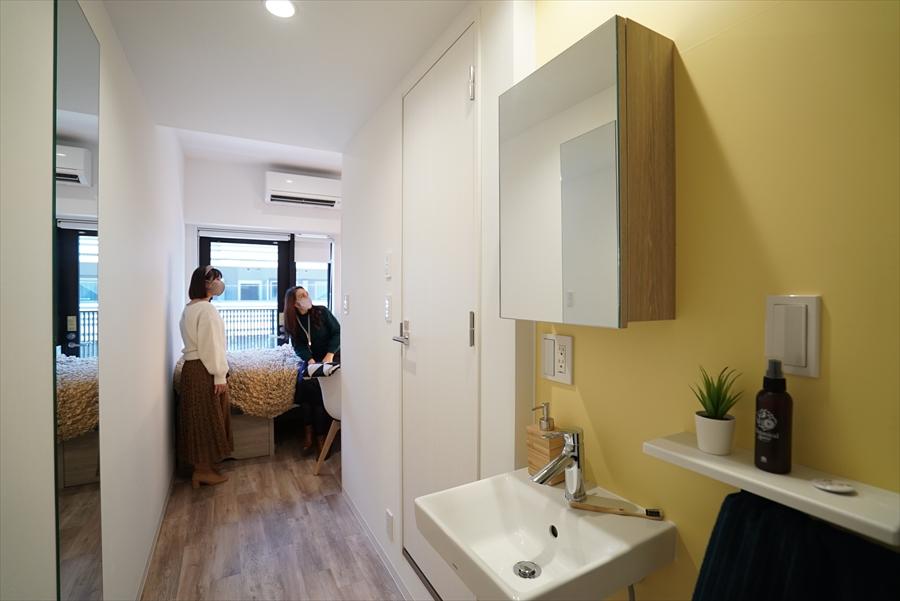
If you choose a share house where each private room has its own shower, toilet, or even a mini kitchen, you can live in a way that is very close to living alone. Because shared spaces are minimized, it is ideal for people who want to stay at their own pace without interacting with other residents more than necessary. If you are privacy-oriented, you should first consider this type of property.
Choose a share house with a small number of residents
If the number of residents is small, for example 5 to 10 people or fewer, the fatigue that comes from communal living is greatly reduced. Large-scale houses are lively and offer plenty of opportunities to socialize, but at the same time, because there are so many faces, there are also more situations where you feel you have to be considerate. In a small-scale house, the living room has a calmer atmosphere and the distance between residents can be maintained at a comfortable level. People who are trying a share house for the first time, or who feel uncertain about whether it suits them, are especially recommended to start with a smaller property.
Choose a property with clear house rules and a well-organized cleaning system
The strictness of rules and whether or not there is a cleaning duty vary widely by property. For example, in properties where “a cleaning company comes to clean the common areas several times a week” or where there are clear rules such as “overnight stays by friends are allowed up to ◯ times a month,” there tend to be fewer people who are sloppy or bring friends over without permission, so trouble is less likely to occur. People who tend to be somewhat obsessive about cleanliness will feel more at ease choosing a property where regular cleaning is performed by the management. It is also effective to check the cleanliness of common areas at the time of viewing, and to ask the person in charge of management questions such as “What kind of residents do you have?” and “Are manners generally observed?”
Choose a “concept-type” share house where people gather around common hobbies or mindsets
Even if you are not good at socializing in general, it is easier to open up to people who share the same hobby. In a concept-type share house—such as one where film lovers gather, or a health-focused house where people with exercise habits gather—you will have plenty of conversation starters and communication will be relatively easy. Because there are common topics, deeper connections can form, making such properties ideal for people who are shy but still want interaction.
Deliberately choose a “large-scale share house” with around 100 residents
Although it may sound like the opposite approach, choosing a share house with a very large number of residents is also one way. In large-scale properties where more than 100 people live, there are many events and plenty of opportunities to interact with others, but at the same time, because one individual does not stand out, it is easier for people to leave you alone when you want to be by yourself. In fact, some people say that being among a large number of people makes it easier to keep an appropriate distance and secure time alone. Because it is easy to set clear boundaries like “I only join when I want to, and at other times I stay in my room,” even introverted people may find such places surprisingly easy to live in.
Use properties that offer trial stays or short-term contracts
If you are anxious about signing a long-term contract from the start, look for share houses that offer short-term stays of 1–3 months or trial stay systems. Once you actually live there, you may find it easier than you expected, or you may realize “after all, this doesn’t suit me.” If it is a property where you can leave without a penalty even if it does not suit you, the risk is low and you can try share-house life more casually.
As you can see, there are many different styles of share houses. If you choose a property that compensates for the aspects you are not suited to, there is a good chance that even people who thought “I’m not cut out for this” can live comfortably. What is important is to assign priorities to your non-negotiable conditions (privacy, quietness, cleanliness, cost, etc.) and search for a property accordingly.
Personally, I believe the saying “bigger is better” applies here, and the more concerns you have about share houses, the lower the risk tends to be with large-scale properties. In larger places, it is easier to set your own distance from others, the cleaning and similar tasks are more often absorbed by the management system, and in many cases the building is reinforced concrete (RC), so soundproofing is overwhelmingly better than in small properties.
Experiences of people who chose share-house living

Finally, let’s look at some voices from actual users. Even in the same share house, people’s impressions differ. Through these real-life stories, try to imagine whether share-house life might suit you.
Mr. A (male in his 20s, working professional)
Originally, I liked talking with people, and when I was living alone, I honestly found it tough to spend my weekday nights just microwaving a convenience-store bento, silently scrolling through my smartphone while eating it, and then going straight to bed. Sometimes I would suddenly realize, “I haven’t really talked to anyone properly all day today,” and the silence of my room would start to feel very heavy. When I boldly decided to move into a share house, even on days when I came home late, there would be a light on in the living room and someone would say, “Good job today!” or “How was your day?” to me. Just chatting for 15 minutes about trivial things like complaints about work or our favorite ramen shops makes me feel a lot better. Now I’m so used to the human presence I feel the moment I open the front door and the everyday exchange of “I’m home!” “Welcome back!” that I might not be able to go back to that completely silent one-room apartment anymore (laughs).
Ms. B (female in her 30s, designer)
To be honest, I am not very sociable, and I had this image of “share houses = a den of party people who are boisterous every night,” so I was convinced it would never suit me. But when I moved from the countryside to Tokyo, I had to keep my rent down, and I decided to take the plunge and choose a small share house with only five residents and private rooms with showers. Once I actually moved in, I found that everyone was busy with work on weekdays, and in the kitchen or living room we just exchanged light comments like “Thanks for your hard work” and didn’t intrude on each other, so I could live more quietly and at my own pace than I had imagined. At the same time, on weekends people would naturally say things like “I’m making curry today; want to join?” so I never felt lonely. If I send a LINE message saying, “I’d like to be alone today, so I’ll go to bed early,” they understand and give me space, and all my housemates have a sense of distance that feels just right. The anxiety I had from thinking “I’m not suited to share houses” turned out to be completely unfounded.
Mr. C (male in his 20s, creator)
Until I graduated from university, I spent most of my time at home drawing or working on my PC, and I was not the type to actively interact with people. I felt, “If I keep this up, my world will stay narrow forever,” so I decided to take the plunge and move into a concept-type share house for creators and artists. At first, I was so nervous that just going out into the living room made me tense up, but people would say things like “I like that illustration,” or “Do you want to make a zine together sometime?” and before I knew it, we were staying up late into the night making work together or planning small exhibition events. As we helped each other with things like photos for social media and portfolio sites, I became much less resistant to talking with others, to the point that even I am surprised. Now, I even get design jobs through connections with the friends I met at that share house. Compared to how I used to think, “I’m not that good,” I’ve realized just how much meeting people can change you.
Mr. D (male in his 40s, company employee)
I moved into a share house for the first time in my 40s, triggered by a job transfer. To be honest, I was very anxious, thinking, “Everyone around me will definitely be in their 20s,” and “I don’t want to stand out awkwardly,” but at the same time my company housing allowance was being reduced, and I gave in to the conditions of zero initial cost & rent more than 20,000 yen cheaper than my previous one-room apartment and decided to go for it.
Once I actually moved in, I found that, partly because it was a large house with about 50 residents, there was a pleasantly “non-intrusive atmosphere.” On weekdays, it’s enough to just exchange greetings like “Thanks for your hard work,” or “You came home late today,” and then I can go straight back to my room. On days when I want to quietly drink a beer alone, I stay in my room, and on Friday nights when I feel like talking to people, I go down to the lounge, where the younger residents are playing board games and invite me with, “Tell us about what it’s like to be at manager level!”
I chose the place with cost performance in mind, but not only have my monthly fixed costs gone down and my savings increased, I have also gained “an appropriate distance where I can interact with others only when I want to,” so I’m quite satisfied now. Hearing about things like the latest job-change trends and social media from the people in their 20s is a much better stimulus than I expected.
How do these stories sound to you? From these user voices, you can see that there are many different ways to enjoy and approach share-house life. Rather than deciding “I’m absolutely not suited to this,” it becomes easier to see that, if you take part in a style that suits you, there is a good chance you can benefit from the advantages.
Tips for finding a share house according to your type
Now that we have looked at the characteristics of people who are suited and not suited to share houses, let’s think about how to find a property that matches your preferences. Share houses also come in many different “colors.” Here, we will introduce tips for choosing properties according to three types: “those who prioritize interaction,” “those who want a quiet life,” and “those who prioritize cost performance.”
How to choose for people who want to prioritize interaction
If you are the sociable type who thinks, “If I’m going to live in a share house, I want to enjoy interacting with lots of people!”, then a community-focused property is recommended. Specifically, check the following points.
Choose large-scale properties with plenty of events
The larger the number of residents in a share house, the more likely it is that events (seasonal parties, hobby meetups, etc.) will be held regularly. In large share houses with 100 residents, there are many opportunities to socialize, such as Halloween and Christmas parties or weekend game nights. They are perfect for people who want to enjoy meeting many different people.
Properties with well-equipped common facilities and lounges
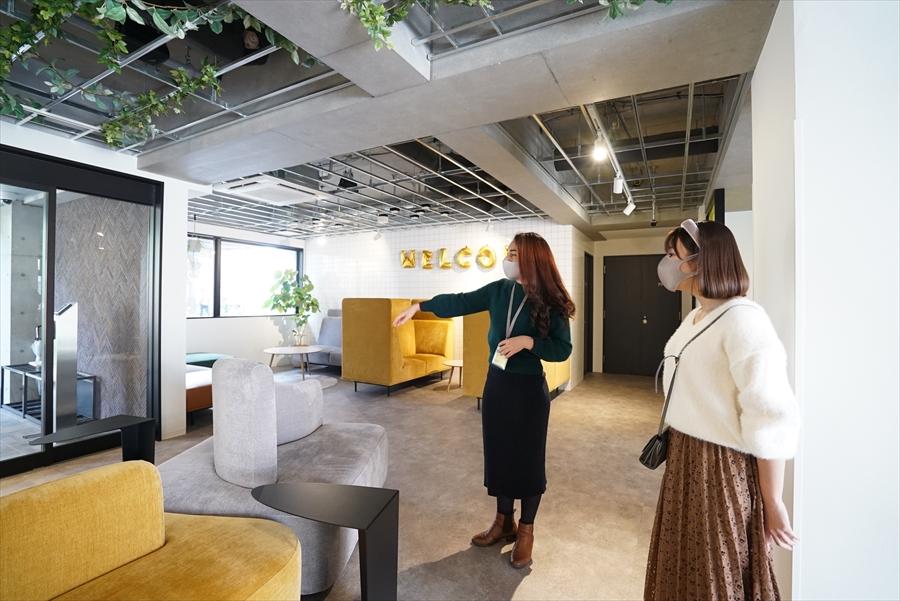
In share houses that have spacious living rooms, theater rooms, large dining tables, and other inviting shared spaces, people naturally gather and interaction arises spontaneously. On the other hand, if the common areas are small or the atmosphere is gloomy, the chances of residents seeing one another decrease. At viewings, be sure to check the condition of the lounge. Ideally, it should be an open space where, when you say “I’m home,” someone answers “Welcome back.”
Create friendships by focusing on concept-type properties
The concept-type share houses mentioned earlier are also attractive for people who prioritize interaction. You can build deeper and more intense connections with people who share the same hobbies or goals. For example, in an “international exchange share house,” you can practice language exchange with foreign residents, and in an “entrepreneur share house,” you can talk about business ideas. You can get excited over common topics, and you may even meet friends who will stay with you for life, not just casual drinking buddies.
How to choose for people who want a quiet life
If you are the cautious type who thinks, “I am interested in communal living, but I want to live quietly at my own pace,” pay attention to the following points when choosing a property.
Choose properties with a small number of residents and a calm atmosphere
Properties with fewer residents and a higher average age tend to offer a quieter lifestyle. For example, share houses in single-family homes with only five residents, or properties limited to people in their 30s and above, generally have more regular life rhythms and fewer people who stay up late making noise. When you actually view a property, if you see things like bookshelves in the living room in addition to a TV, or quiet background music playing, it is likely to be a calm house.
Prioritize soundproofing and private spaces
In properties that use soundproof walls or thick doors, sounds from neighboring rooms are less likely to be heard, reducing stress. Also, as mentioned, rooms with private bathrooms and toilets result in fewer encounters with others, allowing people who seek quietness to live more at their own pace. At viewings, check the soundproofing of the rooms (such as double-glazed windows and wall thickness) and consider whether you feel you can secure enough time to yourself.
Properties with relatively strict house rules
It may be surprising, but share houses with detailed rules—such as “no conversations in the living room after 10 p.m.” or “showers may only be used until midnight”—actually tend to offer a quieter life. People who can show consideration for others and behave sensibly are more likely to gather there, which is reassuring for those sensitive to things like noise and manners. In general, it is better to choose properties where management is solid and cleaning is properly carried out.
How to choose for people who prioritize cost performance
If you are someone who thinks, “More than anything, I want to keep my rent down and reduce my financial burden,” then share houses are a perfect option. While share houses overall offer better cost performance than living alone, here are some key points for choosing properties with an especially strong emphasis on cost.
Target properties with zero initial cost or no key money / security deposit
Unlike ordinary rental apartments, many share houses have no key money or security deposit, and no agent’s fee or only a small one. They also come with shared furniture and appliances, so you do not need to spend money to buy them. If you want to minimize moving-in costs as much as possible, look for properties that advertise “initial cost ¥0” or those running campaigns.
Choose inexpensive areas and property types
While newly built designer share houses in city centers tend to have higher rents, properties in suburban areas, older buildings, and dormitory-type rooms (shared rooms) can have surprisingly low rent. For example, even within Tokyo, you can sometimes find private rooms for 30,000–40,000 yen per month in more suburban areas, and in shared rooms with bunk beds, rent in the 20,000-yen range is realistic. If you prioritize cost above privacy, you should consider such options.
Pay attention to the common service fee
The common service fee (management fee) of a share house often includes water, electricity, gas, and internet charges as a flat rate. In other words, your monthly utility costs become fixed and easy to budget, and in most cases they can be kept lower than when living alone. Check what is included in the common service fee, and if you find a property where things like toilet paper and cleaning supplies are also included and provided free of charge, you can save on daily necessities as well. Compare the total cost performance across properties.
That said, even when prioritizing cost performance, a minimum level of living quality is still important. Extremely cheap properties may have facilities that are too old, or may not be well managed. If you feel uneasy during the viewing, you should have the courage to avoid that property. “Cheap but poor quality” would defeat the purpose, so be sure to choose while carefully weighing the balance between cost and comfort.
More important than “suited or not” are “compatibility” and “preparation”

So far, we have listed various characteristics of “people who are suited to share houses” and “people who are not suited,” but to share a bit of my personal honest opinion at the end: I feel that what determines the satisfaction of share-house life is not so much the “suited or not” labels like in a personality test, but rather compatibility with the property and residents, and how much you have imagined and prepared for life there before moving in.
In the many consultations I have received, I have seen cases where people who said “I’m absolutely not suited to share houses” ended up finding a small, quiet house that matched them and stayed there for a long time, and conversely, people who said “I love hanging out with people!” who became exhausted in large-scale houses with many events.
In other words, rather than the label of “suited or not suited,” what matters far more is whether you chose a place that fits your current condition.
To do that, I recommend taking a moment before moving in to ask yourself questions like these:
・What do I most want to solve right now? (Rent burden / loneliness / commuting time / new encounters, etc.)
・What level of distance from others feels comfortable to me? (I want to talk every day / only on weekends is enough / greetings only are fine…)
・What are my absolutely non-negotiable conditions? (Quietness, cleanliness, size of the room, location, security, etc.)
If you can put these three things into words even a little, it becomes easier to choose “one property that truly has meaning for you” rather than “a share house that seems vaguely nice.”
From here on, you cannot decide everything at a desk.
Actually go on viewings and feel, with your own senses, the state of the shoe rack at the entrance, the atmosphere in the living room, and the vibe of the residents you pass by. I have seen many people whose expressions suddenly brighten the moment they open the door, saying, “For some reason, I really like this place,” even at properties that did not stand out at all in the catalog or photos.
Conversely, even if the conditions look perfect on paper, if you still feel some vague discomfort after the viewing, I think it is fine to trust that intuition.
I believe a share house is not just “a home with cheap rent,” but a place where you can try a way of living that is only possible for you at this particular stage of your life. The laughter that comes from interacting with people, and the simple words like “Good job today” and “Welcome home” that you exchange after work, have a value that cannot be measured in numbers.
If right now you feel even slightly like, “I’m a bit curious,” or “Maybe I could handle it,” there is no need to decide on a contract right away. First, pick just one share house that interests you and make an appointment to view it.
That single small click may nudge your daily rhythm, relationships, and values a little in a better direction.
Without being too bound by the idea of being suited or not suited, let’s look for **“a place that feels right for who you are now.”**





![[10 Examples] Share House Trouble Cases and Prevention Tips to Know Before Moving In](https://sharepare.jp/upload_images/contents/202607/20260716_6a5861b26b7f20engi7.png "[10 Examples] Share House Trouble Cases and Prevention Tips to Know Before Moving In")